
How to Get Video Footage of a Car Accident in New Hampshire
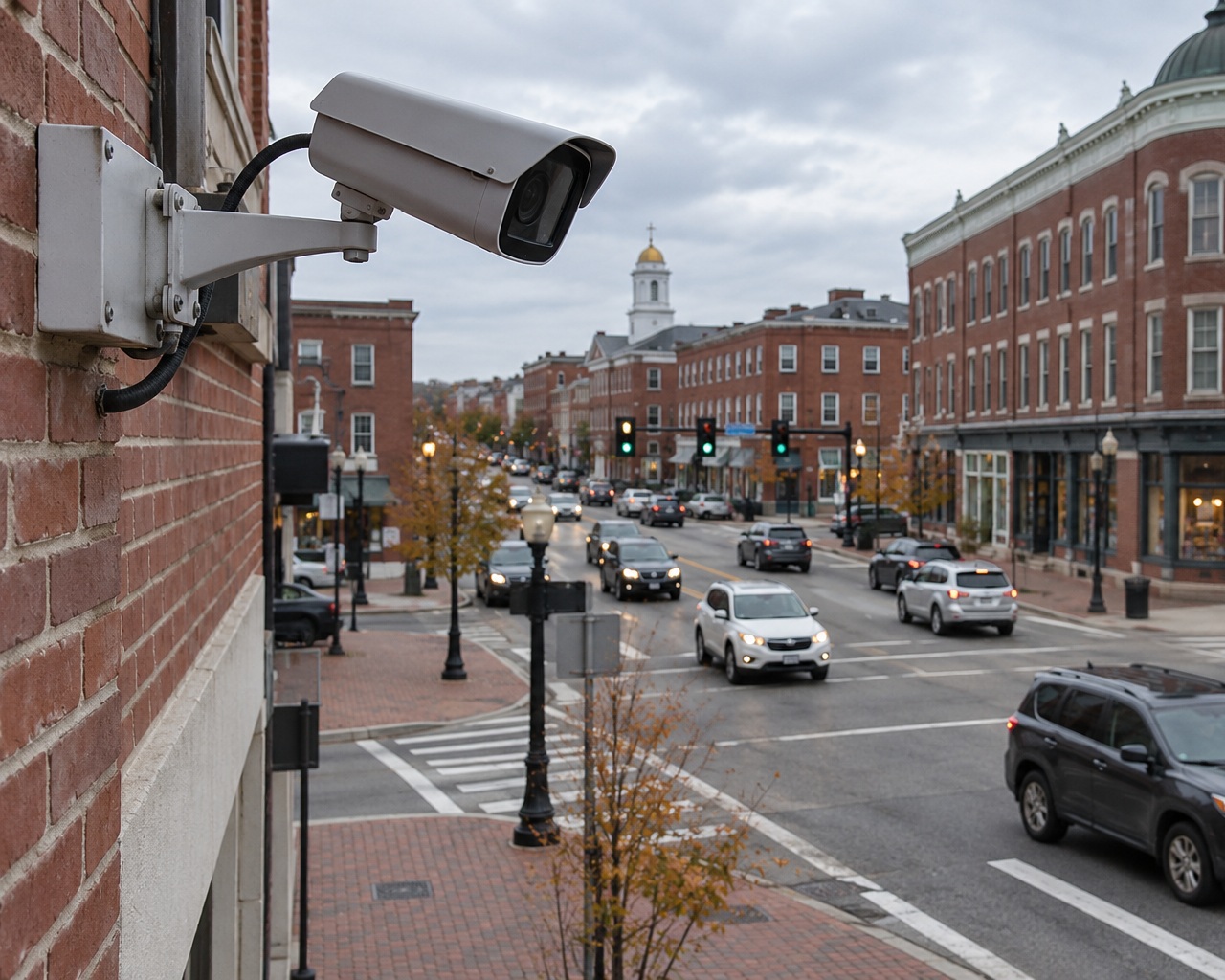
Dash Cams, Business Cameras, and Police Video Can Prove What Happened, but Much of It Disappears Within Days
Video footage of a New Hampshire car accident can make or break an injury claim, but most of it doesn't stick around for long. Store security systems, doorbell cameras, and other recording devices often save over old video within days or weeks, which means the clearest proof of what happened can vanish before an injured person even leaves the hospital.
New Hampshire adds another wrinkle. State law limits government cameras on public roads, so there's usually no state traffic camera recording to fall back on. Unlike drivers in many other states, people hurt in a crash here can't count on a red-light camera or speed camera to have captured what happened.
That makes private video from businesses, homes, and other drivers even more important. A lawyer can track down that footage, send preservation requests to the people who control it, and take steps to keep it from being erased before an insurance company has a chance to dispute how the crash happened.
|
Before the Footage Disappears
|
Why Video Can Make or Break a Car Accident Claim
After a crash, drivers often remember things differently. One says the light was yellow, and the other swears it was red. Video cuts through those disputes. It shows who ran the light, who drifted across the center line, and how fast each vehicle was moving, without relying on shaken memories or the word of a driver who has every reason to shade the truth.
Insurance companies look for any chance to shift blame onto the injured person. Under RSA 507:7-d, someone hurt in a crash can recover compensation only if they were not more than 50% at fault, and any award shrinks by their share of the blame. Clear video can shut down an insurer's attempt to pin part of the crash on the injured driver.
Video can also help prove how serious a crash was. Insurers sometimes claim a collision was too minor to cause real injuries. Footage that shows a car spinning, a hard impact, or an airbag deploying tells a different story, one that's hard for an adjuster to argue with when it comes time to value the claim.
Where to Find Video of a Car Accident
Cameras are everywhere, even when no one notices them at the scene. Some of the most common sources of car accident video include:
- The Injured Person's Own Dash Cam: A dash cam can capture the moments leading up to the crash from the driver's point of view.
- Other Drivers' Dash Cams: Witnesses who stopped at the scene may have recorded the collision without realizing it.
- Gas Stations and Convenience Stores: These businesses often have cameras pointed at the pumps, parking lots, and nearby intersections.
- Banks and ATMs: Bank cameras frequently capture parts of the street outside the building.
- Restaurants and Retail Stores: Shops along busy roads may have exterior cameras that cover the road or parking lot.
- Home Doorbell and Security Cameras: Residential cameras can capture crashes on quiet neighborhood streets.
- Buses and Commercial Trucks: Many fleet vehicles have onboard cameras, especially in truck accident cases.
- Bystanders' Phones: People nearby may have recorded the aftermath or even the crash itself.
Finding these cameras usually means going back to the scene and looking carefully at every building, pole, and driveway nearby. An injured person often isn't in any condition to do that. A lawyer can canvass the area, identify every possible camera, and contact the owners before the footage is gone.
New Hampshire's Camera Law Means Fewer Traffic Recordings
Many states use red-light cameras, speed cameras, and recorded traffic cameras that can capture crashes. New Hampshire is different. Under RSA 236:130, the state and its towns are generally barred from using cameras to identify vehicles or drivers on public roads. That's a big reason New Hampshire doesn't have red-light cameras or speed cameras.
The state does use some highway cameras to manage traffic, but the law generally allows them to be watched live, not recorded. So an injured driver who hopes the state captured their crash on video is usually out of luck. The footage simply doesn't exist in most cases.
That makes private cameras and police video the most likely places to find proof of what happened. Because businesses and homeowners aren't required to keep their recordings, speed matters even more in New Hampshire than in many other states. Waiting a few weeks can mean losing the only video of the crash.
How to Request Police Video in New Hampshire
Many New Hampshire police departments use cruiser cameras, and many officers wear body cameras. That footage can show the crash scene, the position of the vehicles, the road conditions, and what each driver said to the officer. Body camera video can also capture visible injuries and statements a driver might later try to take back.
People can ask the police department for the crash report and any related video, and New Hampshire's Right-to-Know Law covers many public records. But departments may hold back some footage while an investigation is still open, and every agency has its own rules for how long video is kept before it's deleted.
Getting police video can involve paperwork, follow-up, and sometimes pushback from the agency. A lawyer knows how to request these records properly and keep after them when a department is slow to respond. That keeps the evidence moving forward while the injured person focuses on healing.
Here's a look at the most common sources of accident video and why acting quickly matters for each one.
| Video Source | Who Controls It | How to Request It | Why Speed Matters |
|---|---|---|---|
| Personal dash cam | The driver | Save the file right away | Many dash cams loop and record over old footage |
| Business security camera | The business owner or manager | Written request or preservation letter | Footage is often erased within days or weeks |
| Home doorbell camera | The homeowner | Polite request, then a preservation letter if needed | Cloud storage may only keep video for a short time |
| Commercial truck or bus camera | The trucking or transit company | Preservation letter from a lawyer | Companies may delete or overwrite footage |
| Police cruiser or body camera | The police department | Public records request | Release may be delayed during an investigation |
| Bystander phone video | The person who recorded it | Ask at the scene or through a witness statement | People delete videos or lose their phones |
What If a Business Won't Hand Over the Footage?
Many businesses won't give security video to members of the public. Some have company policies against it, and others worry about privacy or legal trouble. That can be frustrating for someone who knows a camera pointed straight at the intersection where they were hurt.
Even when a business won't release the video right away, it can be asked to save it. A preservation letter from a lawyer formally asks the business to keep the footage and warns that erasing it after receiving notice could have legal consequences once a lawsuit is filed. That letter often makes the difference between footage that survives and footage that's lost forever.
If a lawsuit is filed, the injured person's lawyer can use a subpoena, which is a court order requiring the business to turn over the video. Getting to that point takes time, which is exactly why the preservation request needs to go out early. The sooner a lawyer is involved, the better the chances the footage will still be there.
Steps to Protect Video Evidence After a Crash
The steps an injured person takes in the first few days can decide whether video evidence survives. These actions can help protect the footage and the claim:
- Save Dash Cam Footage Right Away: Download the file from the dash cam before it's recorded over during the next drive.
- Note Nearby Cameras: Write down the names of businesses and homes near the crash scene that may have cameras.
- Ask Witnesses for Video: Get contact information from anyone who may have recorded the crash or its aftermath on a phone.
- Get the Police Report Number: The report number makes it easier to request records and video from the department.
- Don't Post Footage Online: Sharing crash video on social media can give insurance companies material to pick apart.
These steps help, but they're only the start. Preservation letters, records requests, and subpoenas take legal know-how and follow-through. Under RSA 508:4, New Hampshire generally allows three years to file an injury lawsuit, but video evidence can disappear in days. A lawyer can move fast to lock down the footage while it still exists.
Driving Justice for New Hampshire's Injured
Video evidence can turn a disputed car accident claim into a clear one, but only if someone gets to it in time. Injured people deserve a legal team that knows where to look, how to request footage, and how to stop it from being erased while they focus on getting better.
Burns, Bryant, Cox, Rockefeller & Durkin, P.A., has served New Hampshire since 1870, and we're one of the state's oldest law firms. With offices in Dover and Portsmouth, our attorneys have deep roots in the communities we serve. We've recovered millions for people hurt in car accidents, including a $3.4 million federal jury award in an auto and trucking crash case.
We handle car accident cases on a contingency fee, so there's no fee unless we recover money for you. Talk to us. We listen, and we'll get back to you within 24 hours. Contact us today to learn more about your legal rights and options after a New Hampshire car accident.
"I was in a motor vehicle accident and suffered more serious injuries than I originally thought. I contacted Attorney Durkin and the response was immediate. From that point forward, he and his professional staff handled everything, and I was able to focus on my recovery. I can't say enough about the level of professionalism and importance in which my case was handled." — S.H., ⭐⭐⭐⭐⭐