
New Hampshire's Comparative Fault Rule Can Reduce or Eliminate Your Car Accident Compensation
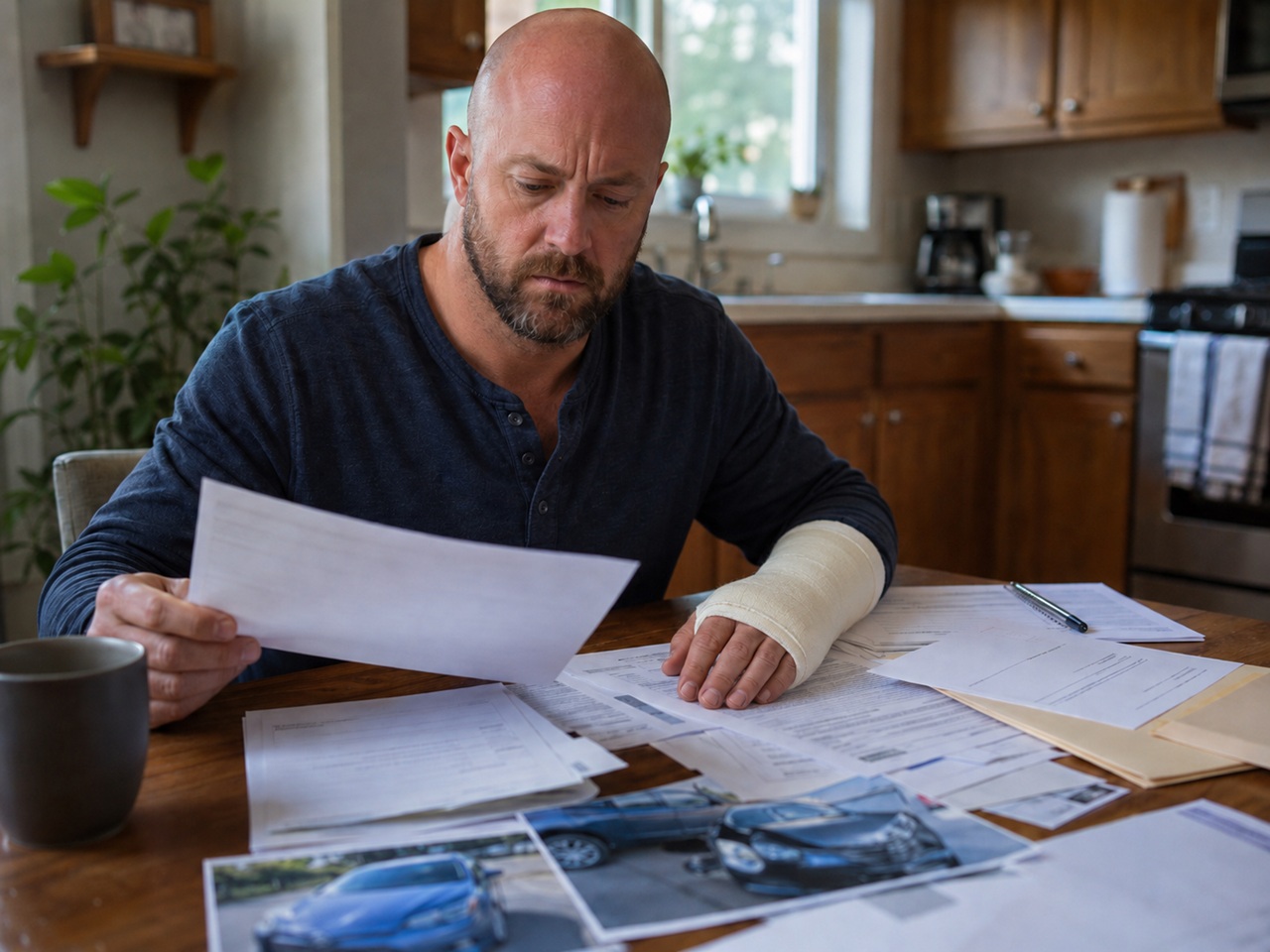
How the 51% Fault Rule Changes What a Crash Victim Can Recover
A car accident rarely comes down to one driver doing everything wrong and the other doing everything right. Insurance companies in New Hampshire know this, and they often look for any evidence that an injured driver shares some blame. Even a small percentage can reduce a settlement. The wrong percentage can wipe out the claim entirely.
New Hampshire follows a modified comparative fault system. An injured driver can still recover compensation after a crash if they share some responsibility, but only if their share of fault does not cross a critical line. That's why a New Hampshire car accident lawyer reviews fault carefully before an insurance company’s number gets treated as final.
At Burns, Bryant, Cox, Rockefeller & Durkin, P.A., we know how insurers use shared fault arguments to reduce what injured drivers recover. Our attorneys build fact-driven cases that push back against inflated blame and protect the compensation our clients need after serious crashes.
How Does New Hampshire’s Modified Comparative Fault Rule Work?
Under New Hampshire RSA 507:7-d, a plaintiff’s damages are reduced by their percentage of fault. A driver found 20 percent at fault on a $100,000 claim would not recover the full amount. Their recovery would be reduced by 20 percent, leaving $80,000.
The critical number is 51. A driver whose fault is 50 percent or less can still recover a reduced award. Once the injured driver’s share reaches 51 percent or more, New Hampshire law can bar recovery entirely.
That threshold creates enormous pressure around a narrow range of numbers. The difference between 50 percent and 51 percent is not small in practical terms. It is the difference between a partial recovery and nothing.
Why Do Insurance Companies Fight So Hard Over Fault?
Insurance companies have a financial reason to push more blame onto the injured driver. The higher your percentage of fault, the less they may have to pay. If they can push your assigned fault above 50 percent, they may argue they owe nothing.
That is why an adjuster’s fault decision should never be treated as the final word. Insurance companies determine fault by reviewing crash evidence, witness statements, police reports, and recorded statements, but they may also interpret that evidence in ways that protect their bottom line.
If an insurer is blaming you for part of the crash, understanding how car insurance companies handle accident claims can help you avoid giving them more room to reduce or deny your claim.
What Tactics Do Insurers Use To Inflate A Driver’s Share Of Fault?
Because the 51 percent threshold can decide the entire case, insurers may look for any argument that moves the injured driver closer to that line. Some arguments are obvious. Others are buried in small details from the crash scene, medical records, or recorded statements.
Common tactics include:
- Requesting A Recorded Statement Too Soon: Adjusters may ask for a statement before an injured driver has had time to process what happened, hoping for language that can be framed as an admission.
- Questioning Reaction Time: The insurer may argue the injured driver could have braked sooner, noticed a hazard earlier, or avoided the collision.
- Disputing Right of Way: Crashes involving turns, merges, four-way stops, and intersections often become fights over who had the right of way.
- Pointing to Vehicle Position: Lane position, impact location, and final resting positions may be used to argue shared responsibility.
- Using Medical History Against The Claim: Some insurers try to blame a pre-existing condition for the injury or argue it affected the driver’s actions before the crash.
- Relying On Incomplete Reports: A police report may contain errors, assumptions, or missing witness information that needs to be corrected quickly.
None of these arguments is the same as a legal finding. They are negotiating positions. A lawyer’s job is to answer them with evidence before the insurance company’s version of events controls the claim.
What Evidence Can Reduce An Unfair Fault Percentage?
The percentage of fault assigned to an injured driver can determine whether they recover anything at all. That makes early evidence collection critical.
Strong evidence may include:
- The Official Accident Report: Police reports may include road conditions, statements, citations, diagrams, vehicle positions, and crash details that affect fault.
- Witness Statements: Independent witnesses can confirm speed, lane position, signals, right of way, braking, and driver behavior.
- Crash Scene Photos: Images of vehicle damage, skid marks, debris, traffic signs, road markings, weather, and visibility can help show what really happened.
- Dashcam or Surveillance Footage: Video can resolve disputes over speed, following distance, lane changes, traffic lights, and right-of-way.
- Medical Records: Prompt care and documented symptoms can help connect the injuries to the crash and counter arguments that the harm came from something else.
- Vehicle Damage Evidence: The location and severity of impact can help reconstruct how the collision occurred.
Waiting too long can make the case harder. Vehicles get repaired. Footage gets deleted. Witnesses become harder to find. The faster evidence is preserved, the harder it becomes for an insurer to assign blame unfairly.
Can You Still Recover If You Were Partly At Fault?
Yes, as long as your share of fault does not exceed New Hampshire’s legal threshold. Being partly at fault does not automatically end a car accident claim.
For example, if your claim is worth $150,000 and you are found 25 percent at fault, your recovery may be reduced to $112,500. But if the insurer claims you were 51 percent at fault, it may argue you cannot recover anything. That is why the percentage matters so much.
When fault is disputed, a claim may need to be built for negotiation, litigation, or both. Knowing when you can file a car accident lawsuit in New Hampshire can help protect your options if the insurance company refuses to assign fault fairly.
How Does Shared Fault Affect Settlement Negotiations?
Shared fault can become one of the biggest pressure points in settlement negotiations. Even when the insurance company accepts that the other driver caused the crash, it may still argue that your own actions reduced the value of the claim.
That affects what you should ask for, how the demand should be supported, and whether a settlement offer is fair. Medical bills, lost income, pain and suffering, future care, property damage, and long-term limitations all matter, but the fault percentage can change how much of those damages the insurer is willing to pay.
Before accepting an offer, it helps to understand what to ask for in a New Hampshire car accident settlement. A low offer may reflect the insurer’s blame argument more than the case's true value.
What Should You Do If The Insurance Company Blames You?
If an insurance company says you were partly responsible, do not assume it is right. You should also avoid arguing casually with the adjuster, guessing about what happened, or giving a recorded statement without understanding how your words may be used.
Helpful steps include:
- Ask For The Basis Of The Fault Decision: Find out what evidence the insurer claims supports its percentage.
- Review the Accident Report Carefully: Check for missing details, inaccurate statements, wrong diagrams, or incomplete witness information.
- Preserve Evidence: Save photos, videos, medical records, repair estimates, witness names, and insurance correspondence.
- Do Not Admit Fault: An apology or guess can be taken out of context and used against you later.
- Take the Right Steps After A Car Accident: Reporting, treatment, documentation, and legal guidance can all protect the claim.
A fault percentage assigned by an insurance company can be challenged. It should be tested against the evidence, not accepted because an adjuster says so.
Driving Justice For New Hampshire’s Injured
A percentage of fault assigned by an insurance adjuster is not a legal finding, and it should never be treated as the final word on your case.
Burns, Bryant, Cox, Rockefeller & Durkin, P.A. has represented injured drivers throughout Dover, Portsmouth, and the rest of New Hampshire since 1870. We build documented, fact-driven cases designed to push back when insurance companies try to exaggerate shared fault or undervalue a claim.
A fault percentage assigned by an insurance company does not have to be the end of the story. Contact us today for a free consultation if a New Hampshire crash left you hurt and an insurer is trying to shift the blame.
"I had a rather traumatic brain injury after a horrid car accident and had some 'problems' that I needed legal assistance with. I recommend Attorney John Durkin 5/5 stars- I was treated with respect and attention, and the case was taken care of so well and professionally, and took a bunch of stress away at a time I was very stressed." - Addy S., ⭐⭐⭐⭐⭐