
How the Brain Moves Inside the Skull During a Crash
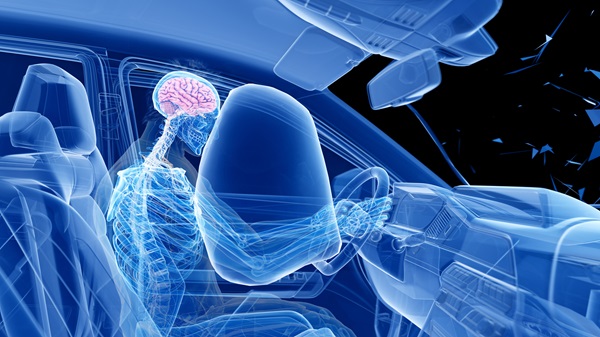
The violent jolt of a crash can turn your skull into a hard, unforgiving shell and your brain into a passenger with no seatbelt. March is Brain Injury Awareness Month, and at Burns, Bryant, Cox, Rockefeller & Durkin, P.A., our New Hampshire car accident lawyers see every day how the invisible forces inside a collision can change a person’s life long after the tow trucks leave.
You might walk away from a wreck thinking you are just shaken up, but inside your skull, the brain may have been slammed, stretched, and bruised in ways that are easy to miss and hard to live with.
What Happens To Your Brain During A Crash?
When your car suddenly stops or changes direction, your body moves with it, but not all at the same speed. Your skull is rigid and connected to the vehicle through your neck and seat belt. Your brain, by contrast, is soft and floats in cerebrospinal fluid.
In a collision, the car slows down in a fraction of a second, your skull whips forward and then back, and your brain keeps moving until it hits the inside of the skull. Even in a crash that looks “minor” from the outside, the speed of these internal movements can be enough to disrupt brain function.
What Types Of Brain Injuries Can These Forces Cause?
The way the brain moves in a crash leads to several common patterns of injury, some obvious and some subtle.
These injuries often result from rapid acceleration, deceleration, and rotation:
- Concussions: These occur when the brain shifts suddenly inside the skull, disrupting normal cell function.
- Contusions or bruises: These happen on the brain surface at the coup and contrecoup sites.
- Diffuse axonal injury: This is caused by stretching and tearing of nerve fibers during violent rotational movement.
- Intracranial hemorrhages: These include subdural, epidural, or intracerebral hematomas when blood vessels rupture and bleed inside the skull.
- Secondary injuries: Secondary brain injuries include swelling and increased intracranial pressure that can worsen damage hours after the crash.
Some of these injuries show up quickly on CT scans or MRIs. Others, especially mild concussions and some diffuse axonal injuries, may not appear on early imaging but still cause very real symptoms. That is part of what makes crash‑related brain injuries so deceptive.
How Even A Minor Collision Can Injure The Brain
People often assume that only high‑speed, catastrophic crashes cause brain injuries. The physics of a collision tell a different story. When your car is struck, it can go from traveling at city‑street speed to nearly zero in less than a second. Your brain doesn’t know the difference between a low‑property‑damage crash and a heavily damaged car. What it feels is acceleration and deceleration.
Even a rear‑end impact in stop‑and‑go traffic can snap the head forward and back fast enough to make the brain slide and twist inside the skull. Safety features such as seat belts and airbags save lives, but they work by stopping your body quickly, which means your brain still has to decelerate inside your head.
In some cases, that internal motion is what causes long‑lasting headaches, memory problems, or personality changes, even when you never hit your head on the steering wheel or window.
What Symptoms Can Brain Motion Injuries Cause?
Because these injuries start with tiny changes inside the brain, the symptoms are often about how you feel and function rather than what you can see. After a crash, it helps to think of your brain as an overloaded circuit board trying to keep everything running at once.
These signs may appear right away or slowly over days:
- Physical symptoms such as headaches, dizziness, nausea, vomiting, fatigue, or sensitivity to light and noise.
- Cognitive changes, including confusion, difficulty concentrating, slowed thinking, or problems with memory.
- Emotional and behavioral shifts like irritability, anxiety, depression, or feeling like you're not yourself.
- Sleep disturbances, whether you are sleeping much more, much less, or waking frequently.
- Balance and coordination problems, including feeling unsteady or clumsy.
Some red‑flag symptoms need immediate emergency care, such as a worsening headache, repeated vomiting, seizures, weakness or numbness, slurred speech, difficulty waking up, or one pupil larger than the other. Those can be signs of dangerous bleeding or swelling in the brain.
An Example Of How Brain Movement Plays Out In Real Life
Imagine a driver on Route 16 near Dover who is stopped at a light when another vehicle slams into the rear of their car. The driver’s body is thrown forward, their head snaps ahead and then back, but the airbag doesn’t deploy, and they don’t hit the steering wheel. They feel rattled and sore but decline an ambulance.
That evening, a nagging headache starts. By the next day, the driver has trouble focusing on emails and forgets simple tasks. Bright office lights trigger dizziness and a feeling of pressure in the head. A week later, they’re still fatigued, irritable with family, and struggling to keep up at work.
Even though the outside of the car has only moderate damage, the internal movement of the brain during that split‑second impact has caused a concussion and possibly microscopic axonal injury. Without understanding the mechanics, the driver might never connect these problems to the crash.
Prompt Medical Care Matters For Your Health And Your Case
Getting evaluated soon after a crash does two important things. Medically, it allows a doctor to rule out life‑threatening complications, provide guidance on rest and activity, and refer you to specialists if symptoms persist.
Legally, it creates a record of your symptoms and how quickly they started after the collision. Insurance companies often question brain injury claims by pointing to gaps in treatment or arguing that symptoms must come from something else.
When you see a doctor promptly, follow up as recommended, and track your headaches, dizziness, sleep changes, and cognitive difficulties, you create a clear timeline that links the forces in the crash to your brain's current functioning. That kind of cause‑and‑effect story is important when you are asking to be compensated for medical bills, time out of work, and the day‑to‑day impact of living with a brain injury.
How A New Hampshire Car Accident Lawyer Can Help
The New Hampshire car accident attorneys at Burns, Bryant, Cox, Rockefeller & Durkin, P.A. know that the most serious injuries are often the ones you can’t see on the outside.
When someone comes to us after a crash with symptoms that point to a brain injury, we look closely at how the collision happened, what parts of the vehicle were damaged, whether there was airbag deployment, and how the head likely moved at impact. We then connect those facts to your medical records and your story about how life has changed since the crash.
Our law firm works to hold negligent drivers and, when appropriate, other responsible parties accountable for the harm that starts with that violent movement of the brain inside the skull.
If you or a loved one has been in a collision and you are noticing new headaches, confusion, mood changes, or other worrying signs, contact us for a free consultation. We will listen to what you are going through, explain your legal options, and fight for the resources you need so you can focus on healing while we focus on accountability and recovery.
"I had a rather traumatic brain injury after a horrid car accident and had some 'problems' that I needed legal assistance with. I recommend Attorney John Durkin 5/5 stars. I was treated with respect and attention, and the case was taken care of so well and professionally and took a bunch of stress away at a time I was very stressed. Mr. Durkin's staff are also very kind. Sandy, his legal assistant, is on top of communication and sending out information about cases. This law firm in general are very nice people!" - Addy S., ⭐⭐⭐⭐⭐