
How Insurance Coverage Changes Before, During, and After a Rideshare Trip
The Same Rideshare Crash Can Trigger Very Different Insurance Coverage
A rideshare crash raises a question that rarely gets asked until someone is already hurt: which insurance policy actually applies?
Unlike an ordinary car accident, a collision involving Uber or Lyft can involve different layers of coverage depending on whether the driver's app was off, whether the driver was waiting for a request, or whether a ride had already been accepted.
Our New Hampshire rideshare accident lawyers at Burns, Bryant, Cox, Rockefeller & Durkin, P.A. know that a few minutes in an app timeline can change which policy and coverage limits apply. That makes establishing the driver's exact status at the moment of impact one of the first things to investigate.
New Hampshire Law Divides Rideshare Driving Into Different Coverage Periods
New Hampshire's transportation network company law distinguishes between a driver who is logged into the rideshare network and one who is engaged in a prearranged ride.
Under RSA 359-U:8, a driver who is logged into the app but has not yet accepted a ride must have at least $50,000 in bodily injury liability coverage per person, $100,000 per incident, and $25,000 for property damage.
Once the driver accepts a passenger's request, New Hampshire considers the driver engaged in a prearranged ride. That period begins with acceptance of the request, continues while the driver travels to and transports the passenger, and ends when the last requesting passenger leaves the vehicle.
The statutory liability minimum during that period rises to $300,000 for death, bodily injury, and property damage.
Those figures are legal minimums, however. They do not necessarily represent the limits of the actual Uber or Lyft policy in effect on the date of a particular accident.
| Driver Status | New Hampshire Requirement | Why It Matters |
|---|---|---|
| App Off | The TNC insurance requirements do not apply simply because the person sometimes drives for Uber or Lyft. | The driver's standard auto coverage and the facts of the crash generally serve as the starting point. |
| App On, Waiting For A Request | At least $50,000 per person and $100,000 per incident for bodily injury, plus $25,000 for property damage. | Coverage is lower than during an accepted ride, making the precise app status especially important. |
| Ride Accepted Through Passenger Drop-Off | At least $300,000 combined liability coverage under New Hampshire law. | Uber and Lyft currently publish higher third-party liability limits for covered rides during this stage, so the actual policy should always be obtained and reviewed. |
Uber And Lyft May Carry More Than New Hampshire's Minimum
The distinction between a statutory minimum and an actual insurance policy is important.
New Hampshire requires at least $300,000 in liability coverage once a prearranged ride begins. Uber and Lyft currently state that they maintain at least $1 million in third-party automobile liability coverage for covered rideshare accidents while a driver is traveling to pick up a rider or completing a ride.
Coverage can change over time, and policy terms, exclusions, fault, and the circumstances of a particular crash can affect what is available. An injured person should therefore not assume that either the state's minimum or a number shown on a general insurance webpage automatically establishes the limit in their case.
The policy in effect at the time of the crash is what needs to be examined.
A Personal Auto Policy May Not Cover A Driver Who Is Logged Into The App
Another potential complication is the rideshare driver's personal insurance.
New Hampshire law specifically allows personal automobile insurers to exclude coverage for losses that occur while a TNC driver is logged into the company's digital network or engaged in a prearranged ride. The law also requires rideshare companies to warn drivers that their personal policy might not provide coverage while they are using the app.
That doesn't mean every personal policy contains the same exclusion. Some drivers purchase rideshare endorsements or other coverage that changes the analysis.
It does mean an injured person shouldn't assume the driver's ordinary personal auto policy will pay the claim because that policy covered the vehicle when the app was off.
The Exact App Timeline Can Become Critical Evidence
Suppose an Uber driver is struck at 8:14 p.m.
If the driver is logged in and waiting for someone to request a ride, a single coverage tier applies. If the driver accepted a passenger's request seconds before impact, the crash falls within New Hampshire's definition of a prearranged ride and a different statutory minimum applies.
That distinction isn't supposed to depend entirely on someone's memory.
Under RSA 359-U:10, transportation network companies must provide precise times showing when a driver logged on and off the digital network when that information is properly requested as part of a claims coverage investigation.
New Hampshire law also requires TNCs to maintain individual trip records for at least one year.
Those requirements make app records, trip records, GPS information, electronic receipts, and other digital evidence particularly valuable when an insurer disputes whether the driver was waiting for a ride or already engaged in one.
More Than One Insurance Policy May Matter
The rideshare policy isn't necessarily the only potential source of compensation.
Imagine you are riding in a Lyft when another driver runs a red light and crashes into the vehicle. The Lyft driver may have done nothing wrong. In that situation, the other driver's liability coverage becomes important, and uninsured or underinsured motorist coverage may also need to be evaluated if the at-fault driver has no insurance or insufficient coverage.
A crash involving several vehicles can create even more layers.
Determining what compensation may be available after a New Hampshire car accident therefore requires more than finding one policy and assuming the investigation is finished. Fault, app status, the identities of all drivers, and each applicable insurance policy can affect where compensation ultimately comes from.
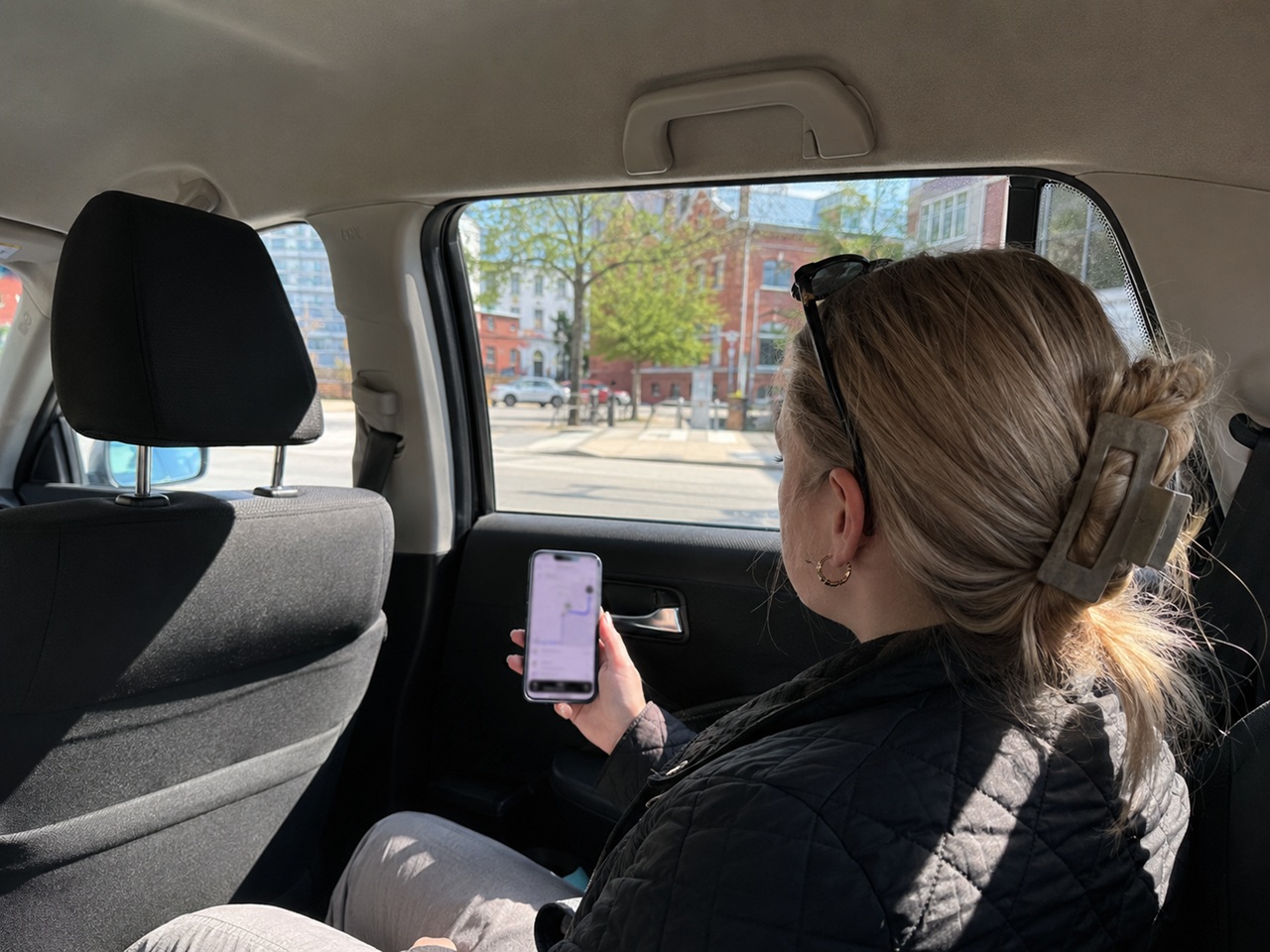
Take A Screenshot Before The App Status Changes
If you can do so safely after a rideshare collision, some simple steps can preserve information that may become important later.
- Screenshot the Ride Information: Save the driver's name, vehicle, license plate, pickup and destination details, and any screen showing the trip status.
- Call the Police: An official report can document the people and vehicles involved, witness information, and what was reported at the scene.
- Photograph the Scene: Capture vehicle damage, road conditions, traffic signals, debris, and anything else that may help explain how the crash occurred.
- Report the Collision Through the App: Creating a record with Uber or Lyft can help establish that the crash occurred during a particular trip.
- Get Medical Attention: Prompt medical care after a car accident can identify injuries and create a contemporaneous record connecting symptoms to the collision.
These are consistent with the basic steps that can protect an injury claim after a New Hampshire car accident, but saving the rideshare-specific information adds another important layer.
Be Careful When Several Insurance Companies Start Calling
A rideshare collision may result in contact from the rideshare company's insurer, the driver's personal carrier, another driver's insurer, or your own insurance company.
Each company may be looking at a different part of the accident and a different potential source of coverage.
You don't have the same obligations to every insurer that contacts you. In particular, don't assume you need to immediately provide a detailed recorded statement to another party's insurance company before you understand who it represents and why the statement is being requested.
Our attorneys regularly handle insurance company disputes arising from New Hampshire car accidents and can determine which insurers should be notified, which coverage should be pursued, and what information should be preserved.
The Three-Year Lawsuit Deadline Still Matters
Sorting out rideshare insurance can take time, but an insurance dispute doesn't stop New Hampshire's general deadline for bringing a personal injury action.
Under RSA 508:4, most personal injury actions generally must be brought within three years of the act or omission that caused the injury, subject to the statute's discovery rule and other circumstances that can affect a particular deadline.
That doesn't mean someone should spend three years negotiating with insurers before getting legal advice. Trip evidence, crash evidence, medical documentation, and witness memories can become harder to obtain much sooner.
Starting a New Hampshire car accident lawsuit isn't necessary in every claim, but the deadline should be identified early so insurance negotiations don't quietly consume the time available to protect your rights.
Fault Still Determines Who Is Responsible For The Crash
App status determines which rideshare insurance requirements apply. It does not determine who caused the accident.
New Hampshire uses a modified comparative-fault system. Under RSA 507:7-d, an injured person can recover when their own fault is not greater than the fault of the defendant or defendants, although the recovery is reduced by the injured person's percentage of fault.
That means a person found 20% responsible can generally have damages reduced by 20%. A person found equally at fault with the defendant is not automatically barred under the statute. Recovery is barred when the plaintiff's fault is greater than the fault of the defendant or defendants against whom recovery is allowed.
In a rideshare case, proving app status and proving crash fault are two separate jobs. Both can affect the ultimate recovery.
The Right Insurance Claim Starts With The Right Timeline
A rideshare accident can look like an ordinary collision from the side of the road. Behind the scenes, however, a few seconds in the driver's app history can determine which insurance requirements apply and which policies need to be investigated.
Our New Hampshire rideshare accident attorneys at Burns, Bryant, Cox, Rockefeller & Durkin, P.A. can obtain trip information, verify the driver's app status, investigate fault, identify available insurance, and handle insurers while you focus on recovery.
Our car accident results include a $1.95 million arbitration award for a woman who suffered arm, head, and internal injuries in a head-on collision, along with numerous other substantial auto accident recoveries.
If you were injured while riding in an Uber or Lyft, struck by a rideshare driver, or involved in another New Hampshire rideshare collision, contact us to discuss what happened. You can also request a consultation with our team.
"I worked with Matt Cox after I was injured in a car accident. I appreciated the humanity and integrity of the process that resulted in a big win! I’m grateful to have had the case approached as thoughtfully as it was." - Anonymous, ⭐⭐⭐⭐⭐